Crazy tales of an aging goth kid on the front lines of education, perseverance, living, learning, and surviving after starting over. and over. and maybe over again….You have to laugh or you'll cry. Please read with a grain of salt as everything posted here is not meant to be overly serious. Opinions are my own and only represent my own weird thinking. If you have a short attention span I apologize – I write my posts like they're journal articles and I climb WAYYYYYY high up on a skyscraper before I drop a mic.
If you google the phrase, “Tips for being a successful leader if you are an extrovert”, in 0.30 seconds there are 18.9 million results. On the flip side, googling “Tips for being a successful leader if you are an introvert”, in 0.30 seconds 38.1 million results pop up. Even if you just take a look at the first few top articles that pop up, on the introverted side most of the articles are written from the standpoint of “overcoming” your introverted tendencies. How to be “less yourself” to fit into the perceived demands of a leadership role. Tips for “Recharging” in your personal life so that you have the energy to lead during your professional life. Meanwhile, the articles for extroverts have a more positive tone regarding “leveraging your strengths to achieve your professional goals”, or simply list out all of the positive attributes that extroverts have that allegedly make them innately suited to leadership roles. None of the articles that I found in a quick cursory search were geared toward “toning yourself down for the sake of those that you lead”, or “how to be more introverted”, while the introvert articles were almost all geared to how a person could adjust their natural tendencies/preferences to be more “appealing” to their team or to “fit in better” rather than mentioning any of the strengths that introversion might bring to a role. The one exception tended to be the trait of being a good listener – which is consistently mentioned as an important trait for impactful leaders to have (and a strength of introverts); and was mentioned as one area where some extroverts have to intentionally focus as it may not just come “naturally”. I would not describe myself as either completely introverted or extroverted. I recently came across a new word: AMBIVERT. I first experienced the word in a LinkedIn Post from a colleague who had shared it from Eric Partaker.
Partaker’s graphic doesn’t directly address leaders – in fact it is a cheat sheet FOR leaders on how to engage their quieter or more introverted employees. As a person, and as a leader, I am a proud Ambivert. I can easily give a presentation to a crowded room with minimal nerves and be relatively engaging (at least per the PD surveys I’ve gotten back), but I can also be quiet and deeply reflective and disengage from overly boisterous social scenarios. Extroversion does not come natural to me – I can utilize those skills when a situation calls for it in order to get a job done or to lead by example, but I would much rather be on the sidelines than in the game or the star of the show. This really puts me in the minority when I am in a room full of traditional leaders.
When I was a kid, I also had this chameleon-like quality. I was just as content to sit in the basement alone and put together a puzzle, read one of my mom’s Nancy Drew books, or color than I was in ballet class or performing in a dance or piano recital. I wasn’t “shy” and would volunteer in class to answer questions or read out loud or hang my work on the wall; but I didn’t prefer activities like being in classroom skits or playing solos or having all of the attention on me. If I was a member of a group, I did my part (or sometimes everyone else’s) to make sure that the job got done well but didn’t necessarily want to be the star of the show. I always wanted good grades and good feedback, but I never really (and still don’t) prefer when given feedback in front of a crowd. To this day, I prefer to get good news in private where I won’t feel eyes watching my reaction. (When I was waiting to find out if I got my first assistant principal position, the only place in the building that I could find to take the call was a closet in the art teacher’s empty classroom. In the dark I listened to the voicemail offering me the job and I jumped up and down fist-pumping silently (accidentally knocking over some packages of red construction paper in the process); then I fixed my face and walked calmly out of the closet, to the copy machine, and no one was any the wiser about how happy I was. As I have gained more leadership experience, I have learned how to handle both public praise and criticism with less anxiety, but it’s always easier when there’s forewarning. For instance, if I know that I will be brought up in a positive way at a School Board Meeting and can prepare to react I am far more confident and comfortable. Due to this, I always try to warn my own teachers when something is coming – either positive or negative because I know how uncomfortable that I can be when I’m getting feedback (or am simply being mentioned) in a way that isn’t entirely private.
There are drawbacks to being a pretty private person – one of them is always being accused of being “aloof”, “condescending”, “too serious”, “cold”, or “uncaring”. I once received professional feedback that my staff perceived me as being “cold and uncaring”, and I once had a union complaint that I “don’t smile enough”. While I never felt that those comments were fair, I did reflect upon them because people’s perceptions become their reality. I show my staff that I care in the ways that suit my style (I bake for them and make handmade Christmas gift displays, and use the shoutout board). But that’s MY style – to discount theirs isn’t inclusive. I am NOT a potluck person – I just don’t like them. I feel like if I invite people over then I should provide them with their nourishment not make them bring their own. (Plus there’s never enough food and everyone brings dessert and then there’s nothing to actually eat). But my team LOVES a good potluck. They put up a signup sheet and commit to bringing dishes to celebrate right before school breaks or around holidays. I have NEVER signed up – but I do wait until the day beforehand and see what no one is bringing (almost always a main dish lol!), and surprise them with it the next day without making it known who brought it. I brought 2 crock pots of Italian Beef with rolls for sandwiches the last time, so everyone had something hot to eat. I “participated” without participating. They got what they needed (food, gratitude, and a HOT meal), and I got to make sure that I got what I needed out of it – casual/on-the-fringes, non-public, non-committal participation. Just because something isn’t your style doesn’t mean you can’t “suck it up” and do something intentionally kind that others DO need or respond to.
Many schools and communities now have Diversity, Equity, and Inclusion committees. The concept that all people should feel welcome in public schools, universities, and workplaces is an important one. Public schools are diverse spaces full of students (and staff) from varying cultural, racial, socioeconomic, societal, and ability backgrounds. Valuing one another’s diversity (whether it be through recruitment, promotions, or other ways) could be considered the first “step” in creating an inclusive environment. For instance, if there is no diversity within your staff how can you ever even get to the equity and inclusivity portions? One could argue that once you have hired more female school leaders, the next step is equitably paying them. On average, female school superintendents are not only less common but those that exist are generally paid less. In 2022, the ILO group released the following statistics:
So – not only are there fewer female superintendents (many of whom are paid less than their equally credentialed male counterparts), but many are elevated within their current districts without being able to break into new roles as easily. So, external hires that are men are outpacing female’s external superintendency offers as well.
Even in scenarios where Diversity and pay Equity exist – how are we ensuring the Inclusivity part of DEI? Not just at the macro levels of gender, race, and cultural background, but in what I refer to as the “diversity of the mind”? How are we failing to include people through “super-tiny-not-quite-microaggressions-but-exclusionary practices”? A great challenge of leadership (and teaching) is leading who you HAVE not who you ARE. This year, I went to the IASA annual conference because I was invited to attend for free to accept a scholarship. It truly was an inspirational conference, and I learned a ton from amazing practitioners. However, the imposter syndrome was real. The conference is “meant for” superintendents - not assistant principals. So even though I had earned a scholarship for my superintendency certification program, and that everyone that I met was wildly supportive and welcoming – the act of walking into the room was intimidating. Everywhere I looked there was a sea of black and navy-blue suitcoats on men (mostly over 45), with a smattering of (mostly blonde-haired mid-40’s) women. I intentionally sat at a table with an African American woman who was wearing bright colors and had leopard print glasses – because I felt that we might be kindred spirits. At one point, as the officials from IASA were standing in a line in front of the stage about to be introduced, I asked the woman “Why do you think all those people are lined up over there by the stage?” She responded, “I’m not sure there’s nothing on the program – but did you notice how they all look alike except for the one woman in line and she’s last in line – I don’t like that.” She wasn’t wrong. But it also made me reflect upon the event itself.
Even with all Courtney & Kate’s cheerleading in my head, and all my own experience with persistence and overcoming obstacles, I STILL hesitated at that conference door’s threshold. What could have been done intentionally to ensure that all newcomers felt welcomed? ”Assigned” tables? Tickets with seat numbers? Tables by region? It was already intimidating to walk into the room, but then to navigate the politics of “where should I sit because no one that I know is here and I don’t know the rules” added some (mostly self-imposed) anxiety. Who is left out when we make the assumption that everyone has the agency to choose the “correct” seat? Who is made to feel awkward when we don’t go through the motions of explaining the instructions for where we should sit, where to go for lunch, or where the restrooms are? Just like in a classroom we go through the instructions even if we think all the students know them – there is always someone who was absent or is new to the procedures. Shouldn’t we provide as much as possible without someone having to ask for what they need? I was recently scrolling twitter and saw a great comment by @SynthiaSalomon who said: “Being welcomed is an important aspect of the social contract between humans”. Just take it from Oscar Wilde:
“Nothing annoys people so much as not receiving invitations”.
Oscar Wilde, The Importance of Being Earnest
So, if diversity and equity are the INVITATION, then inclusivity is feeling genuinely welcomed. As we talk about creating school cultures that are inclusive for our students and staff – it takes more than inviting everyone to the table – it means intentional decisions that WELCOME them into the activities, the conversations, and the ‘family’ that we create – and that KEEP them feeling included. As the young outsider teacher that was the only aging goth kid on staff, whose significant other was a musician, who was quiet, not into sports or March Madness, or going to Cubs games with my fellow teachers, I knew that I had my colleagues’ respect, and that they liked me, but I can’t say that I always felt welcomed or related to. When we had a staff Spirit Day themed: “Dress Like You Did in High School” – I can ASSURE you that I was the only one at Perspectives Charter School that rolled up looking like this (and I definitely felt weird about it!)
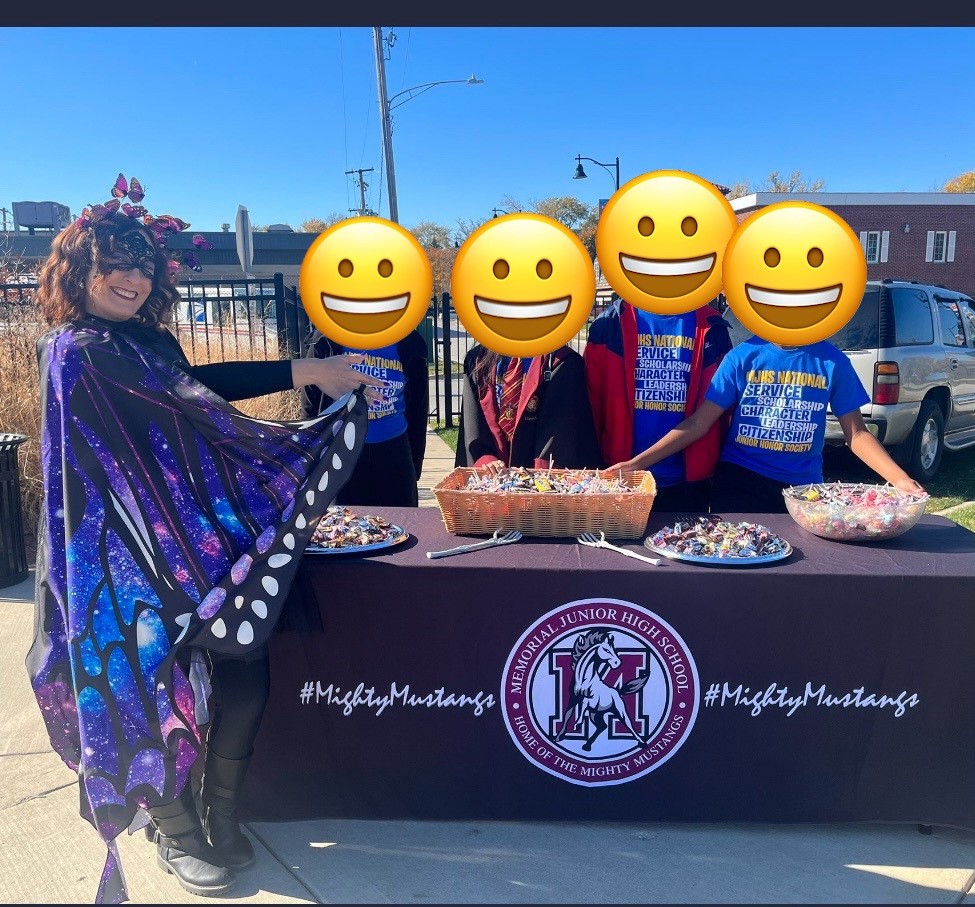
I took that feeling to heart when I moved into school leadership. I knew that I might not be comfortable at the basketball games (I’ll still go to it to support the kids), but my principal knows that I’m the one to call on when it’s time to wear a light up tutu butterfly costume at the Village’s Trunk or Treat! In fact, she encourages it! So, for every time that she knows that I’ll need to do something that isn’t the easiest for me, she makes sure that there’s an opportunity for me to shine. One of the many reasons I nominated her for the Illinois Principals’ Association Middle School Principal of the year this year! She takes Diversity, Equity, and Inclusion so seriously and passionately that she tunes in to all her people in a way that I really admire!
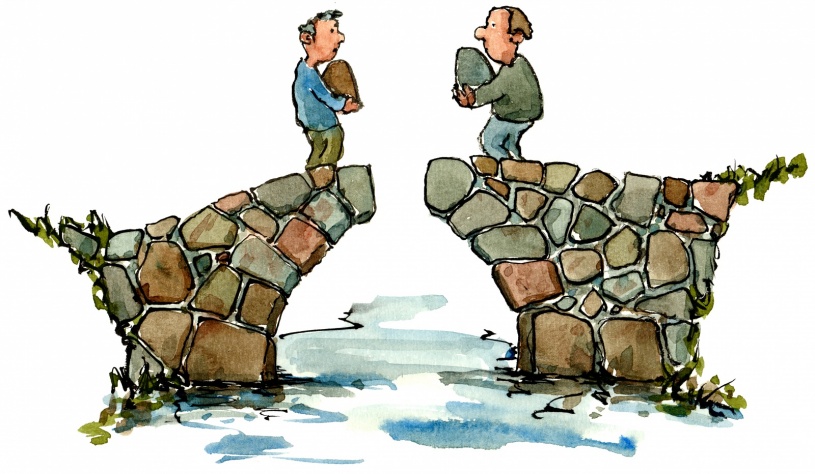
To truly create spaces where your “weirdos” feel safe and included, it means leading who you HAVE not who you are. Just like our staff, students need to feel seen and have trusted adults that intentionally reach out to them. As a leader, one intentional choice that I make is trying to truly get to know each new staff member as a human being first. That means listening to their stories, finding out about their hobbies, asking what artist did their tattoos, where they like to go on vacation, what they like to do outside of work, and most importantly what they HATE to do. No one can have their way all the time when it comes to Professional Development. Sometimes we have to do a sit-and-get training or a staff meeting. But we CAN intentionally ask the art teacher who mostly keeps to themselves to design the powerpoint background and give them credit for it. We CAN ask the very quiet school librarian to share her idea for “What Am I Reading Posters” with the staff at that staff meeting? It’s about intentionally finding that way that a staff member can connect and be included and then BUILDING the bridge (and maintaining it so it doesn’t crumble). It shouldn’t be up to people to try to force their way to the table or across the bridge. INVITE them into the room and let them know that their way is valued.
When it comes to intentionally seeking out and connecting with and including people in a crowd does anyone say it better than Jeff in Almost Famous?
Once you build an inclusive staff – then you can spread those inclusivity methods throughout your student body.
At a previous school, we used a student survey called the Equal Opportunities Schools Survey. It was meant to identify students from typically underserved communities for honors and AP courses to increase campus equity. However, the survey also had an important social-emotional component. One of the questions asked students to identify a trusted adult on staff as well as an adult that they related to. When the results came out, we now had access to some especially important information. Now we had lists of students who identified certain individuals that they really trusted. As an A.P. if I had a student disciplinary concern, now I knew who else to invite to the meeting with the student. Someone that they trusted and who knew would listen to their concerns. It showed us which students related to and had positive relationships with what staff members so that we could intentionally create student schedules, activities, and opportunities for them to interact with one another. As a high school student, it would have been a game changer for me to be able to interact with the Chemistry teacher (she was young, single, lived in the Belmont and Clark neighborhood, had streaks in her hair, and listened to Sleater Kinney). I RELATED to her – but I doubt she ever knew it. I had her for one semester and then never really interacted on that side of the building again. If I had taken the survey and my counselor had had the results of my EOS survey, she could have intentionally placed my locker outside of that teacher’s room to start my day in a positive way. I could’ve seen myself represented and had more interactions with the kind of adult that made me feel welcomed at school. The EOS survey gave us powerful information to create social work groups for students intentionally, and it also revealed students that identified NO trusted adults OR adults that they related to. Now we had a list of students that we could reach out to and TALK TO, listen to, and invite to events or classes in which they would excel. We had the TOOLS to create a bridge. It should NOT be up to the staff members or the students to feel like an outsider AND create their own invitation to the party AND just join in when the party date comes.
How are you reaching out to your “weirdos”? To those students or staff members who don’t automatically participate. To those staff or students who come in and do their job every single day but don’t necessarily stand out. Or to those that DO stand out (because they have wild makeup or fashion choices that aren’t traditional), but don’t have others like them in the building? Diversity and equity – despite the challenges facing us in this area – can be addressed “easily” (easily isn’t the right word but hear me out). We can hire diverse candidates and pay them equally and then create policies to ensure that we’re doing that. But INCLUSION is a fluid, ongoing, constant, and ever-changing CHOICE that requires unique actions that change from month to month or year to year depending upon the unique aspects of the WHOLE individuals on your staff or student body. Are you finding and creating genuine relationships, friendships, mentorships, and opportunities for your “Eeyores”? (Hot take – they’re not always sad, they aren’t pessimists, but they do tend to keep a little more to themselves)
Recent research indicates that there is a worldwide loneliness epidemic. While the pandemic may have exacerbated it, it was already in the works. Since the 1980’s the Japanese have identified a population referred to as hikikomori (shut ins), who withdraw entirely from society. In Japan, this coupled with an aging population may lead to dire consequences for the economy in addition to serious mental health concerns. In the United States, the American Academy of Pediatrics has declared a national emergency in youth and adolescent mental health. One aspect that both the US and Japanese mental health crises have in common is a lack of connection, low self-esteem, anxiety, and depression. An important fact to note regarding the hikikomori, per the CNN article above, a rising percentage of them are people between the ages of 35-50. (sounds like the age of the bulk of the workforce/your staff). Both your students and staff members spend a large majority of their waking hours in a school building. If we want to prevent loneliness, isolation, bullying (much of which is an off shoot of forming poor peer relationships, having low self-esteem, or copying bullying behaviors witnessed in the home), we have an obligation to create inclusive, welcoming, and safe spaces for our teachers to work and our students to learn. I recently talked to Charle Peck on her podcast, the Thriving Educator. One of the topics we talked about is that to truly end bullying we need to disincentive the behaviors that motivate bullies by removing the social “rewards” of those behaviors (awards, attention, promotions, etc.). Additionally, we need to CELEBRATE the behaviors that inspire kindness, inclusivity, and self-belief. However, without intention, we can’t expect these things to happen by accident. Behind every healthy family, workplace, school district, or classroom there are daily decisions being made to ensure that not only does everyone have a seat at the table, but that that seat is cozy. What can you do today to make someone’s seat a little more comfortable, even if you need to stand up for a few seconds?
As a former history major and middle and high school social studies teacher, I have both studied and taught about the Middle Ages many times. As a kid, I was obsessed with the Arthurian legends, Merlin, Robin Hood, the Three Musketeers, and the Count of Monte Cristo. While it was an interest, I never got too into studying Medieval History as a specialty in college. Rather, my foci were US History and Eastern/Southwestern Asian History and the Ottoman Empire. So, I hope that my fellow historians out there are patient and will go along with the extreme oversimplifications that I fully admit that I will use in this post. Firstly, make no mistake – I do NOT romanticize the Middle Ages. Life pretty much sucked for everyone. The black death was rampant, work was backbreaking and awful, outlooks were bleak, governments corrupt, and violent raids common. Life wasn’t awesome even for the wealthy. Medical care was mystical superstition at best and harmful at worst (drinking urine to cure syphilis? sure, why not!) So, although the Renaissance Faire might be fun; it’s nowhere close to the reality of the stinky cesspool that most medieval people toiled through daily. But the more than I have reflected upon the state of public education lately, the more convinced I am that since its inception, the only reason that public education in the United States has been as successful as it has been so far, is that it relies on a monastic system not too different from that of the Middle Ages. Much like the French invented perfume to cover up the stink of the Medieval lifestyle, we are all toiling together to prevent public education from “stinking”.
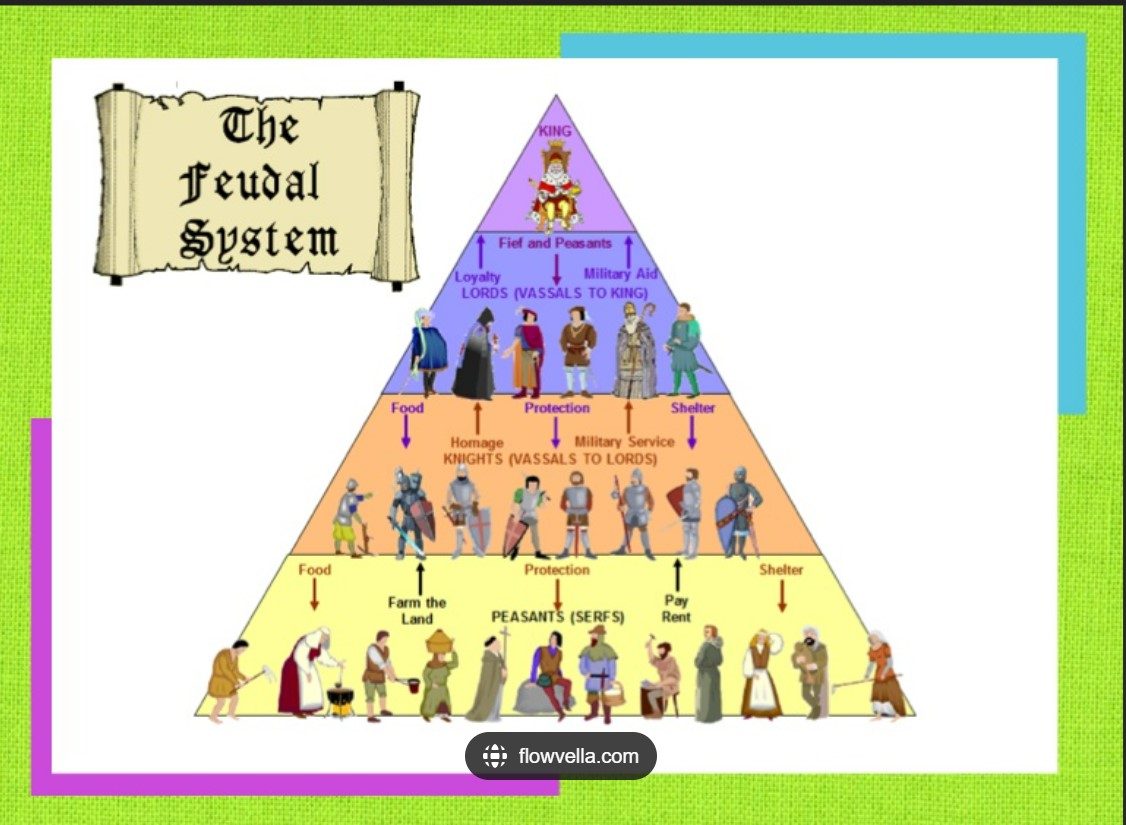
To keep things EXTREMELY brief and overly simple – the medieval feudal system organized society in a series of mutually beneficial “social classes” based not on the exchange of money, but rather goods, services, work, land, and protection. Within this system most people were serfs – working the land owned by wealthy lords in exchange for shelter, protection from raiders, and other basic needs. The wealthy lords themselves protected these serfs from Viking invaders (and other assorted ne’er-do-wells) behind stone walls in exchange for the serfs’ labor. In order to protect their lands, lords utilized “vassals” aka knights to protect their lands and serfs when necessary and in return these vassals got prime portions of land and goods. An offshoot of these vassals included monastics living in monasteries. These monasteries were safe and walled off much like manors and provided important services (crops, prayers, the selling of indulgences, and the copying of books) to lords, vassals, and serfs. Many of these monks were the “less athletic” sons of wealthy landowners, other clergy members, or knights. They weren’t necessarily cut out for knighthood but were privileged and educated/literate and were often the third or fourth sons of their families and not likely to get much of an inheritance. In exchange for their living this monastic lifestyle, they received the “benefits” of a safe place to stay, an education, food, and in a shockingly modern twist – old age pensions/care for when they aged and could no longer work. For more information on the benefits of being a medieval monk, check out this list.
To be sure, being a medieval monk or nun was certainly the choice of many devout medieval people. These people were truly passionate about religion and service and would have lived the monastic lifestyle whether or not these benefits existed – they just wanted to “serve God’s will”. While monasteries certainly benefitted from the passion of these devout clerics – there were some individuals who just served in monasteries because it made sense for their lifestyle. The “career” suited their needs. In MANY ways, public education is the modern-day equivalent of a monastic lifestyle. The “passion” of those that would work well beyond their contact hours for subpar pay is taken advantage of. Certainly, there were monks living in medieval monasteries that may have worked until 2 am transcribing an ornate page of the Bible to finish it despite “work hours” ending at 6 PM. But surely, there were many monks who just did their daily chores competently and nothing extra. Public education in this country has actually placed far too much reliance on “monastic passion” to keep schools afloat.
Schools are like any other workplace. They are an employer – and like any other employer there are individuals that are wildly passionate about their jobs – who go above and beyond and ask nothing in return. There are accountants, dentists, babysitters, and any other variety of professionals that go to work, do their tasks competently/well, and do not burn themselves out doing “extra”. Their companies survive. Meanwhile, in education teachers, paraprofessionals, and administrators are expected to “do whatever it takes for the kids”. The monastic lifestyle of teaching USED to be enough for many people. For example, “you won’t get paid much but you’ll have a generous pension, free/low-cost high-quality benefits, summers off, hours that allow for a work life balance, etc.” There were even tiers to this monastic lifestyle. If you worked in the inner city – chances are your salary was much higher; but the downside was dealing with potentially more challenging of a work environment. More students with trauma or who were low income; potentially more violence/gangs/poverty. At least in Chicago, this meant being required to live within the city limits; but in exchange for these additional challenges, you were monetarily compensated. Meanwhile, suburban districts that have always paid much less (unless they were a very affluent town), were able to say to applicants “you won’t make what you make in the city, but you won’t be dealing with x, y, and z.” Now that even suburban districts are inundated with low-income students, refugees, ever increasing special education needs, behaviorally challenging students (and parents), a lot of the so-called “benefits” of choosing these lower paying places have been continually eroded. Afterall, if I’m going to be dealing with violence, trauma, etc. why wouldn’t I go somewhere that’s going to pay me more to do so? So, all districts’ basic survival (not for the extras like sports or programs, etc. for the REGULAR daily operations) DEPENDS upon the unpaid/underpaid labor of its workforce in ways that no other industry would expect. (As you can imagine this more negatively impacts female and minority educators). In short, the DEVOUT “monks” that are in it just for the passion of teaching – still have to pay their bills. If the job no longer does that, then those people can fulfill their passion to work with children in a wide variety of careers or volunteer opportunities outside of schools. However, if schools as we now know them are going to survive, they must no longer rely on a sexist monastic set up in order to do so.
A recent article in Education Weekly pointed out the deep challenges faced by the inequality in the reliance on women’s unpaid labor in the educational workforce.
“It’s a little bit of a patriarchal assumption that we hired these people to make the magic happen. And they’re gonna do whatever it takes to make the magic happen, and [the district doesn’t] have to enhance anything,” said Louise Williamson, a roughly 30-year veteran English teacher in Southern California who has served as a fellow with TeachPlus, a nonprofit dedicated to improving the profession.
In some ways, the pile of expectations on educators feels like a natural extension of a working world where mothers are expected to return to the office just weeks after giving birth and cough up nearly $13,000 a year for child care, while earning just 82 percent of what men do for the same work.
Medieval monks had such a “sweet deal” because they were highly educated, literate, and produced copies of literary works that benefitted society. In many ways, the same can be said of educators. They require multiple certifications, degrees, and credentials. They must be able to pass background checks. They now need to do crisis and/or mass shooting trainings. They coach athletics, lead clubs, and supervise school events for extra money. They spend their own funds to decorate or organize their classrooms. Even the ones who “make the big bucks”; school administrators, have faced decreasing salaries/raises, increased responsibilities, and increased public scrutiny. As communities expect more and more school-sponsored activities and groups; someone needs to plan and supervise these events. That falls to school administrators. Every administrator that I know is doing the work of 1.5-3 adults. Superintendents in rural areas are often the superintendent, a principal of one of the district’s schools, AND the transportation director. So even if this person is making 100K a year, that’s far less than they should be making for doing 3 FULL TIME jobs that require expertise, certification, and knowledge. One reason so many school districts are relying on their staff to be these “monks” is simply a lack of investment in the appropriate number of staff. Many schools are using assistant principals as dual department chair/dean/assistant principals in schools of 500-1000 students. Schools haven’t fallen apart at the seams publicly because the employees’ nearly religious devotion make sure things are still being pulled off (in short, they are “making the magic happen”). But as more and more people engage in appropriate work-life balance practices, practice self-care, take jobs that support their lifestyle, and “act their wage” eventually something will have to give.
There is no flexibility in the monastery of public education. Districts can’t offer their administrators or teachers a hybrid or “work from home” schedule. The students are in the building from 8-3:30 on certain days and that’s not going to change (unless there is a fundamental shift in how we handle childcare in this country – but that’s a whole other Pandora’s box). If COVID did one thing, it pulled the veil away for some teachers to realize just what sort of sacrifices they had been making to their family life, etc. and what sort of work possibilities other industries offer. With virtual learning and after school and sports activities cancelled, teachers taught virtually from 7-4ish with flexibility in their day to do other things and realized how much all of the “extras” they do daily without compensation were actually costing them. If you’re wondering why there are less clubs, programs, or sports at your own child’s school in the past few years it could be because staff have decided that their time has become more valuable than the crumbs of money that the extra duty pay may have landed them. If we look at public education as a JOB – we have to make sure that people doing their JOB fits with the credentials and efforts required as well as pays enough that doing ONLY that job allows a person to survive. Sure, coaching and clubs and supervising detention “pay extra”, and many teachers do these extra positions on top of their job to earn extra money, but that’s not enough in a country with a housing crisis, ever increasing prices, and cost of living soaring. BEFORE the pandemic (and the ensuing inflation), approximately 20% of teachers had second jobs to make ends meet.
“Overall, about 20 percent of teachers hold second jobs during the school year, accounting for roughly 9 percent of their annual income. According to the Bureau of Labor Statistics, teachers are about three times as likely as other U.S. workers to take on this burden.”
This is not even limited to teachers or paraprofessionals in schools. MANY school administrators have also taken on side gigs with Professional Development companies, writing books, working as consultants, or as leadership coaches. Teachers are WELL KNOWN for using the “admin makes so much money” quote as a way to advocate for themselves to be paid more. But two things can be true at the same time – both groups can simultaneously be overworked and being taken advantage of and not paid what they’re worth based upon their credentials, experiences, or the importance of the work that they do. In fact, the looming leadership shortage should be ringing massive alarm bells with 3 in 5 school principals planning on leaving their jobs within the next 5 years and an ever-dwindling number of applicants and newly certified leaders to take over. Rather than fighting WITHIN the monastery, the junior (teachers and staff) middle range (deans, assistant principals, and principals) and senior “monks” (district office administrators, superintendents, and boards of education) should be banning together to create a system that works for all of the students and employees. A system that compensates all of the employees fairly (so they don’t have to work second jobs to survive) and doesn’t rely on the free labor of a few passionate employees to prop up the system under the pressure of understaffing and a lack of flexibility.
Just like the medieval manor relied on the wealth of the local lords – school districts operate in much the same fashion. Schools are funded mostly on the backs of the local taxpayers. Unlike some countries, that fund their public schools mostly with federal tax dollars; on average, less than 11% of most school districts’ budgets come from federal funds. And of those funds, some come as a result of competitive grants that aren’t just “given” to every district, but districts must compete against one another to be “gifted” with some of these dollars (which may or may not be given in subsequent years). Look at the chart below to see just how little school funding in the United States is provided by the federal government (per Max Roser and Esteban Ortiz-Ospina’s 2016 article – “Education Spending”. While perhaps this arrangement once was functional for all involved (I doubt it); as the economy and reality of American life have changed over the years, relying on the local taxpayers may seem just as impractical as continuing to rely on local lords of the manor in Medieval times eventually became. In fact, continuing to do so encourages the propping up of the entire system on the dwindling number of the “devout” who are still willing to live a monastic lifestyle.
Monasteries relied on the philanthropic donations of their local lords, vassals, and churchgoers during Medieval Times. This system worked as long as there was enough prosperity and “wealth” to go around. (Let’s be real though the Middle Ages were a truly sucky time for most people. “Wealth” mostly equated to land as the feudal system didn’t yet rely on money as we know of it in a widespread fashion.) As long as the serfs were producing enough crops and livestock to pay their manor fees with enough extra for the lords to profit from by selling to other manors or towns; and vassals were making enough on raids/Crusades/military campaigns, and lords were donating enough extra wealth to the church to fund monasteries; the system “worked”. Keep in mind when I say it “worked” I mean that things were miraculously somehow functional (except for widespread death, an average lifespan of 33 years old, plague, mass inequality/racism/sexism/religious intolerance, and frequent Viking and/or “barbarian” raids). The feudal system (like all systems) only began to fall apart and become something “different”, when this arrangement was no longer functional for those with power within the social structure. For example, local lords held their own “private vassal armies” and true “nation states” weren’t necessarily a thing until after the year 1066 in England (the time of William the Conqueror), the 12th century in France (with the Capetian dynasty), and even later in Germany (the Germans took a LONG time giving up on the idea of disorganized local territories). These local lords each ruled their manors and lands in whichever way they saw fit (much like how each of the 860 school districts in Illinois do now). However, times began to change quickly as the world got “safer” from foreign invaders. No longer did serfs NEED to rely on the “benevolence” of local lords for protection. No longer did the arrangement of serfs exchanging backbreaking work from dawn to dusk with only one day off a week make sense. As growing numbers of peasants ran away to towns and cities and working more “traditional” non-farming trades; money became what was exchanged for goods and services in this new economy. Simultaneously, lords began to lose their local power as kings and emperors consolidated their power and created modern “countries” rather than a mishmash of manors each ruled by local lords. As a result, lords lost many of their “vassal armies” as these “knights of service” became paid members of king’s armies. Once the printing press was invented in the 1400’s, the need for monks transcribing books letter by letter by hand became less necessary; and as more jobs were available to educated men and women in newly sprouting up towns; the monastic lifestyle was less of a desirable “career opportunity” to those that were less devout and had only gotten into the business for the lifestyle that it offered. Some of these individuals went into the early medical or scientific field. Those that remained in the monasteries stayed until they lost funding, fell apart, became obsolete, or were closed by their diocese. Since monasteries were often a place where wealth or items with value were stored, toward the end of the Middle Ages they became targets for raiders and were robbed openly since they were unprotected. As a result, some of the more remote and unprotected monasteries closed and the religious leaders of the day moved as city cathedrals like Notre Dame and Westminster became epicenters of religious life.
As a Catholic school student from grades 1-12; I know for a fact that many of my teachers were living an extreme version of this monastic lifestyle. Although at the time I didn’t realize it, the vast majority of my teachers in grades 1-8 were teaching at my school because they enjoyed teaching; but were sacrificing many of the “benefits” of a career in education (a livable salary, union protections, or a planning period that occurred more than once per week). In retrospect, few of my teachers “needed” to work. All of my elementary teachers’ husbands were the breadwinners. They taught because they wanted to be a teacher not out of a necessity for money/a career. The benefit of not “needing” to work meant they could voluntarily choose the ultra-monastic lifestyle of working at a Catholic school. In exchange for a modest old-age pension (just like monks), and the ability to share their devout passion for teaching, they had the advantage of very small class sizes and had zero behavioral issues (students who didn’t behave at my school just got kicked out there was not a scenario where a teacher had to “deal with” misbehaviors or even intervene). I still recall our principal, Sister Eileen driving a kid named Adam in her own car to his mom’s office to drop him off because he was talking too much in the classroom (it was the 90’s and apparently this was allowed then?) The embarrassment to both mom and child ensured he never misbehaved again – at least I don’t remember him having another issue. So, my teachers made barely any money, but they were guaranteed a lifestyle that allowed them to teach in an environment with many benefits. (Half days every Friday during Lent, a shorter school day & year than the public-school districts, no special education students, special education meetings, no IEPS, no behavioral issues, small class sizes, etc.) Eventually, this system began to collapse – Catholic school tuition in the late 90’s really exploded. It was no longer possible for middle or lower-class parents to afford tuition, and it was no longer fiscally responsible (or all-that-legal) for schools to just kick kids out. Special education and speech services began to be offered, etc. Now that many Catholic schools have closed due to the insane tuition costs; the most devout of these teachers have fewer schools to choose from for their work; and fewer of the “positives” that their monastic like service used to guarantee. Public schools are going through a similar although less dramatic transformation.
As mentioned earlier, many of the “benefits” of working in a lower-paying suburban district have gradually eroded away. It is no longer “enough” to tell teachers “you’ll get paid less than city teachers but you won’t have city problems”. The racially and socioeconomically charged undertones of that statement never REALLY escaped anyone did it? But now that the traditionally labeled “city problems” of gangs, rising and more demanding special education needs, gangs, violence, lack of productive and/or supportive parent involvement, etc. relying on educators’ monastic devotion isn’t enough. Now that education is facing post-COVID complexity, rising anger and vitriol from parents/community members (people literally throwing things during school board meetings), and an increasing teacher, sub, and administrator shortage, there is also increasing competition from the “medieval town” of other industries. After all, if I have lost most of the “beneficial” or “fun” parts of the lifestyle that a career in education once offered me, but am being offered none of the flexibility of hybrid work, higher paying corporate education gigs that allow for travel or work from home opportunities, or better benefits, when will the lure of a better life for myself and my family eclipse my monasticism? Afterall, educators aren’t monks – when they choose their career, they are also choosing a particular lifestyle that best suits their talents and family’s needs. In the 70’s, many female teachers beat their own children home and were home by 3. This is simply no longer the reality (if it ever really was).
Many paraprofessionals chose to be teachers’ aides as a way to work part time and spend half the day with their small children and this has also eroded in addition to more responsibility. (In my own district changing diapers has now become a paraprofessional’s responsibility as there’s been an increase in student entering Kindergarten without any potty training). If you ask these people, that was not something they were remotely expecting when they took their job. In the words of one of my employees, “I applied at an elementary school not a daycare. Please don’t tell me this is what I signed up for when I definitely did not.” The comment “this is what you signed up for” is often thrown in educators’ faces as a way to stop the narrative of discussing what is going on in schools. But a rise in violence against educators, school shootings, ever-increasing to-do lists, and very little additional compensation is not really what anyone “signed up for” – although they are dealing with it heroically every day and teaching with as much devotion and fervor as ever due to their love of their students and teaching. And for as easy as it is to tell educators “if you don’t like it then leave”, that doesn’t address the issue that the students don’t have that same choice. If they don’t have what they need (professional educators, arts programs, interventions, and well-rested respected adults to care for them), they can’t “just leave”. They’re legally required to go to school. While opting out is an option for the adults it isn’t for the students.
Why not invest in making sure that those educating our children are able to put food on their table and not work a second job? Why rely on their monastic-style “love of the kids”? As any marriage counselor will tell you, eventually “love is not enough”. Recently, I was at a statewide conference of superintendents and discussed this issue with some colleagues. They all agreed superficially that every person in our industry is unfairly doing the job of 1.5-3 other people and we need to hire more, overwork people less, and raise everyone’s pay – but one brought up that “if you talk to the CSBO’s statewide they’ll tell you that the significant raises a lot of districts have already given since COVID aren’t sustainable and that cuts are actually going to have to come rather than additional benefits in order to keep things moving as well as they are now”. And I don’t disagree – IF we continue to fund education based on the wildly inequitable local funding sources that we rely upon now. There simply MUST be a better way.
When kings and emperors began to consolidate their power into individual countries; the entire feudal system changed. Whether we want to admit it or not, we have kings and emperors in our country/world and many of them actively are working against strengthening public education. If every billionaire on the planet gave half of their wealth up (which would still leave them wildly wealthy), world hunger and inequality could essentially be solved.
According to the geniuses at the Brookings Institute, raising the income of the poorest people to the global poverty line ($1.90/day more or less) would cost about $80 billion annually. So, a very modest allocation of 0.064 percent of the wealth of the top 1 percent would be enough to end desperate poverty. Of course, the wealthiest 1 percent would need to make this allocation annually to end poverty, but 0.064 percent is so small, that it really isn’t much of a burden. Since billionaire wealth grew more than 10 percent in 2015; ending poverty doesn’t even mean the rich can’t get richer.
Continuing to rely on local “lords and vassals” to bear the weight of an increasingly crushing system without them will continue to lead to high quality educators “escaping” from the manor and running into the “town” (Edtech and curriculum companies, PD providers, corporate ed jobs, and literally any other industry that you can think of). If we continue as monks (paras, teachers, admin, superintendents, and boards) fighting within our own “monasteries” (districts/states) amongst ourselves for the limited local crumbs currently available to us, rather than banning together to demand a restructuring of school funding nationally, then nothing changes. Teachers have union reps to protect them from unfair labor practices – but I have frequently said that building administrators are the union reps of the students/school, and that superintendents/boards of education are the union reps of the system/profession of education. It is long past time that these 3 “unions” form a coalition (think the Teamsters) to address the protection of our most important citizens – students and those who work with them every day. I’m not actually referring to a traditional labor union – but rather an organized and concerted effort nation-wide to address the funding situation that has created our reliance on this modern-day monasticism. Special interests from the tobacco industry, the Fraternal Order of Police, and a wide variety of groups have formed PACS and Super PACS to advocate for funding and legislation that will advance their profession – if we keep “closing the classroom/monastery door” and keep on keeping on with making the magic happen until it’s no longer possible and we have no choice, it may be too late. Waiting until it’s too late to make lasting change and bring equality for our students, dignity and respect (monetarily and figuratively) to our profession, and strength to our local communities foreshadows an entirely new Dark Age. Restructuring our funding so there is less pressure on local communities to bear the entire burden of school funding will strengthen local communities who will then become able to fund other important local projects – creating a safer more amazing community for us all to live in.









 Like a Phoenix Rising