Crazy tales of an aging goth kid on the front lines of education, perseverance, living, learning, and surviving after starting over. and over. and maybe over again….You have to laugh or you'll cry. Please read with a grain of salt as everything posted here is not meant to be overly serious. Opinions are my own and only represent my own weird thinking. If you have a short attention span I apologize – I write my posts like they're journal articles and I climb WAYYYYYY high up on a skyscraper before I drop a mic.
If you google the phrase, “Tips for being a successful leader if you are an extrovert”, in 0.30 seconds there are 18.9 million results. On the flip side, googling “Tips for being a successful leader if you are an introvert”, in 0.30 seconds 38.1 million results pop up. Even if you just take a look at the first few top articles that pop up, on the introverted side most of the articles are written from the standpoint of “overcoming” your introverted tendencies. How to be “less yourself” to fit into the perceived demands of a leadership role. Tips for “Recharging” in your personal life so that you have the energy to lead during your professional life. Meanwhile, the articles for extroverts have a more positive tone regarding “leveraging your strengths to achieve your professional goals”, or simply list out all of the positive attributes that extroverts have that allegedly make them innately suited to leadership roles. None of the articles that I found in a quick cursory search were geared toward “toning yourself down for the sake of those that you lead”, or “how to be more introverted”, while the introvert articles were almost all geared to how a person could adjust their natural tendencies/preferences to be more “appealing” to their team or to “fit in better” rather than mentioning any of the strengths that introversion might bring to a role. The one exception tended to be the trait of being a good listener – which is consistently mentioned as an important trait for impactful leaders to have (and a strength of introverts); and was mentioned as one area where some extroverts have to intentionally focus as it may not just come “naturally”. I would not describe myself as either completely introverted or extroverted. I recently came across a new word: AMBIVERT. I first experienced the word in a LinkedIn Post from a colleague who had shared it from Eric Partaker.
Partaker’s graphic doesn’t directly address leaders – in fact it is a cheat sheet FOR leaders on how to engage their quieter or more introverted employees. As a person, and as a leader, I am a proud Ambivert. I can easily give a presentation to a crowded room with minimal nerves and be relatively engaging (at least per the PD surveys I’ve gotten back), but I can also be quiet and deeply reflective and disengage from overly boisterous social scenarios. Extroversion does not come natural to me – I can utilize those skills when a situation calls for it in order to get a job done or to lead by example, but I would much rather be on the sidelines than in the game or the star of the show. This really puts me in the minority when I am in a room full of traditional leaders.
When I was a kid, I also had this chameleon-like quality. I was just as content to sit in the basement alone and put together a puzzle, read one of my mom’s Nancy Drew books, or color than I was in ballet class or performing in a dance or piano recital. I wasn’t “shy” and would volunteer in class to answer questions or read out loud or hang my work on the wall; but I didn’t prefer activities like being in classroom skits or playing solos or having all of the attention on me. If I was a member of a group, I did my part (or sometimes everyone else’s) to make sure that the job got done well but didn’t necessarily want to be the star of the show. I always wanted good grades and good feedback, but I never really (and still don’t) prefer when given feedback in front of a crowd. To this day, I prefer to get good news in private where I won’t feel eyes watching my reaction. (When I was waiting to find out if I got my first assistant principal position, the only place in the building that I could find to take the call was a closet in the art teacher’s empty classroom. In the dark I listened to the voicemail offering me the job and I jumped up and down fist-pumping silently (accidentally knocking over some packages of red construction paper in the process); then I fixed my face and walked calmly out of the closet, to the copy machine, and no one was any the wiser about how happy I was. As I have gained more leadership experience, I have learned how to handle both public praise and criticism with less anxiety, but it’s always easier when there’s forewarning. For instance, if I know that I will be brought up in a positive way at a School Board Meeting and can prepare to react I am far more confident and comfortable. Due to this, I always try to warn my own teachers when something is coming – either positive or negative because I know how uncomfortable that I can be when I’m getting feedback (or am simply being mentioned) in a way that isn’t entirely private.
There are drawbacks to being a pretty private person – one of them is always being accused of being “aloof”, “condescending”, “too serious”, “cold”, or “uncaring”. I once received professional feedback that my staff perceived me as being “cold and uncaring”, and I once had a union complaint that I “don’t smile enough”. While I never felt that those comments were fair, I did reflect upon them because people’s perceptions become their reality. I show my staff that I care in the ways that suit my style (I bake for them and make handmade Christmas gift displays, and use the shoutout board). But that’s MY style – to discount theirs isn’t inclusive. I am NOT a potluck person – I just don’t like them. I feel like if I invite people over then I should provide them with their nourishment not make them bring their own. (Plus there’s never enough food and everyone brings dessert and then there’s nothing to actually eat). But my team LOVES a good potluck. They put up a signup sheet and commit to bringing dishes to celebrate right before school breaks or around holidays. I have NEVER signed up – but I do wait until the day beforehand and see what no one is bringing (almost always a main dish lol!), and surprise them with it the next day without making it known who brought it. I brought 2 crock pots of Italian Beef with rolls for sandwiches the last time, so everyone had something hot to eat. I “participated” without participating. They got what they needed (food, gratitude, and a HOT meal), and I got to make sure that I got what I needed out of it – casual/on-the-fringes, non-public, non-committal participation. Just because something isn’t your style doesn’t mean you can’t “suck it up” and do something intentionally kind that others DO need or respond to.
Many schools and communities now have Diversity, Equity, and Inclusion committees. The concept that all people should feel welcome in public schools, universities, and workplaces is an important one. Public schools are diverse spaces full of students (and staff) from varying cultural, racial, socioeconomic, societal, and ability backgrounds. Valuing one another’s diversity (whether it be through recruitment, promotions, or other ways) could be considered the first “step” in creating an inclusive environment. For instance, if there is no diversity within your staff how can you ever even get to the equity and inclusivity portions? One could argue that once you have hired more female school leaders, the next step is equitably paying them. On average, female school superintendents are not only less common but those that exist are generally paid less. In 2022, the ILO group released the following statistics:
So – not only are there fewer female superintendents (many of whom are paid less than their equally credentialed male counterparts), but many are elevated within their current districts without being able to break into new roles as easily. So, external hires that are men are outpacing female’s external superintendency offers as well.
Even in scenarios where Diversity and pay Equity exist – how are we ensuring the Inclusivity part of DEI? Not just at the macro levels of gender, race, and cultural background, but in what I refer to as the “diversity of the mind”? How are we failing to include people through “super-tiny-not-quite-microaggressions-but-exclusionary practices”? A great challenge of leadership (and teaching) is leading who you HAVE not who you ARE. This year, I went to the IASA annual conference because I was invited to attend for free to accept a scholarship. It truly was an inspirational conference, and I learned a ton from amazing practitioners. However, the imposter syndrome was real. The conference is “meant for” superintendents - not assistant principals. So even though I had earned a scholarship for my superintendency certification program, and that everyone that I met was wildly supportive and welcoming – the act of walking into the room was intimidating. Everywhere I looked there was a sea of black and navy-blue suitcoats on men (mostly over 45), with a smattering of (mostly blonde-haired mid-40’s) women. I intentionally sat at a table with an African American woman who was wearing bright colors and had leopard print glasses – because I felt that we might be kindred spirits. At one point, as the officials from IASA were standing in a line in front of the stage about to be introduced, I asked the woman “Why do you think all those people are lined up over there by the stage?” She responded, “I’m not sure there’s nothing on the program – but did you notice how they all look alike except for the one woman in line and she’s last in line – I don’t like that.” She wasn’t wrong. But it also made me reflect upon the event itself.
Even with all Courtney & Kate’s cheerleading in my head, and all my own experience with persistence and overcoming obstacles, I STILL hesitated at that conference door’s threshold. What could have been done intentionally to ensure that all newcomers felt welcomed? ”Assigned” tables? Tickets with seat numbers? Tables by region? It was already intimidating to walk into the room, but then to navigate the politics of “where should I sit because no one that I know is here and I don’t know the rules” added some (mostly self-imposed) anxiety. Who is left out when we make the assumption that everyone has the agency to choose the “correct” seat? Who is made to feel awkward when we don’t go through the motions of explaining the instructions for where we should sit, where to go for lunch, or where the restrooms are? Just like in a classroom we go through the instructions even if we think all the students know them – there is always someone who was absent or is new to the procedures. Shouldn’t we provide as much as possible without someone having to ask for what they need? I was recently scrolling twitter and saw a great comment by @SynthiaSalomon who said: “Being welcomed is an important aspect of the social contract between humans”. Just take it from Oscar Wilde:
“Nothing annoys people so much as not receiving invitations”.
Oscar Wilde, The Importance of Being Earnest
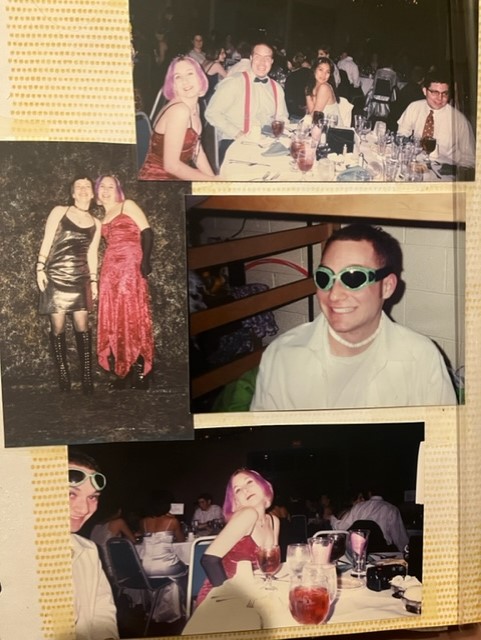
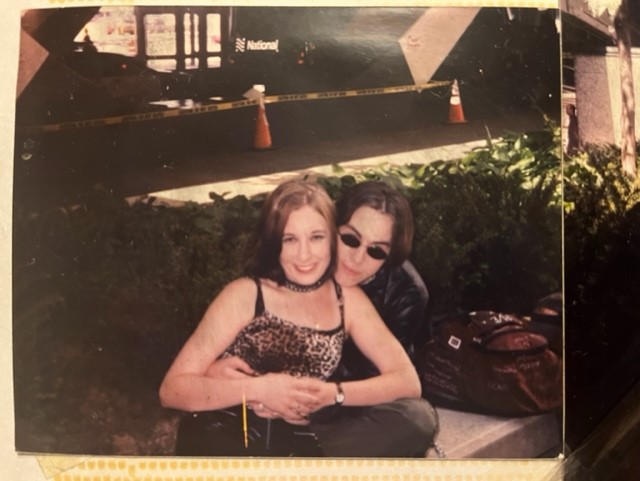
So, if diversity and equity are the INVITATION, then inclusivity is feeling genuinely welcomed. As we talk about creating school cultures that are inclusive for our students and staff – it takes more than inviting everyone to the table – it means intentional decisions that WELCOME them into the activities, the conversations, and the ‘family’ that we create – and that KEEP them feeling included. As the young outsider teacher that was the only aging goth kid on staff, whose significant other was a musician, who was quiet, not into sports or March Madness, or going to Cubs games with my fellow teachers, I knew that I had my colleagues’ respect, and that they liked me, but I can’t say that I always felt welcomed or related to. When we had a staff Spirit Day themed: “Dress Like You Did in High School” – I can ASSURE you that I was the only one at Perspectives Charter School that rolled up looking like this (and I definitely felt weird about it!)
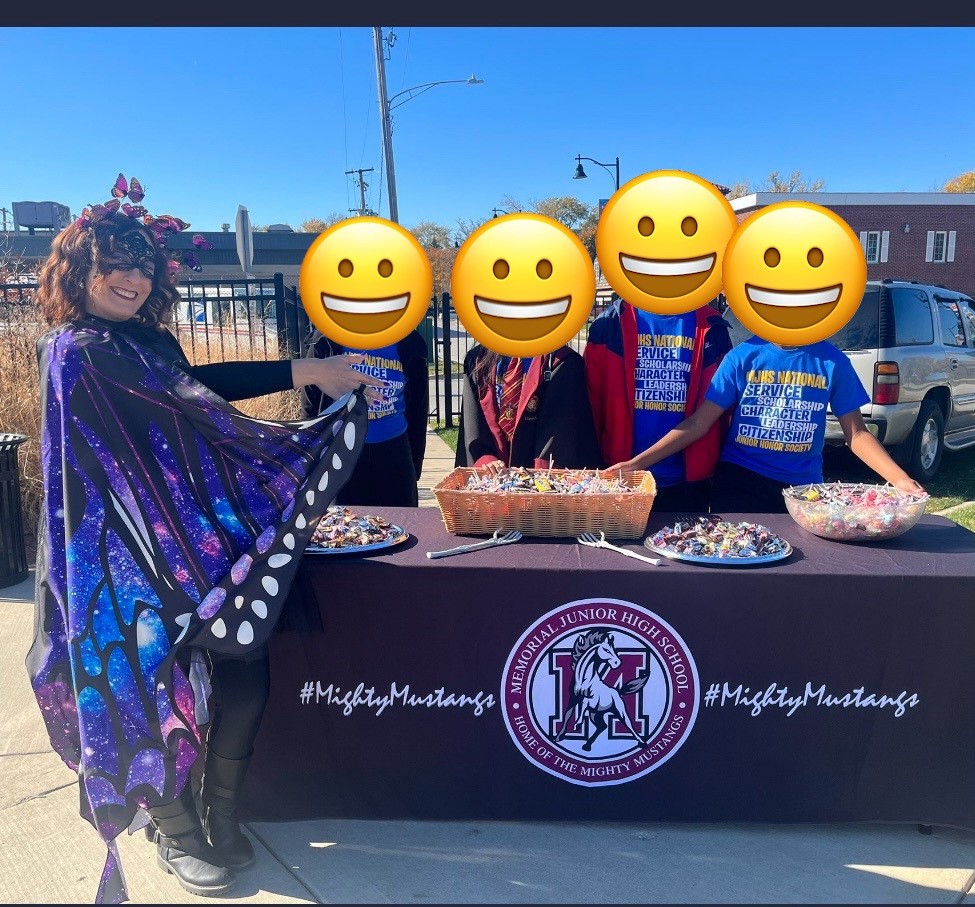
I took that feeling to heart when I moved into school leadership. I knew that I might not be comfortable at the basketball games (I’ll still go to it to support the kids), but my principal knows that I’m the one to call on when it’s time to wear a light up tutu butterfly costume at the Village’s Trunk or Treat! In fact, she encourages it! So, for every time that she knows that I’ll need to do something that isn’t the easiest for me, she makes sure that there’s an opportunity for me to shine. One of the many reasons I nominated her for the Illinois Principals’ Association Middle School Principal of the year this year! She takes Diversity, Equity, and Inclusion so seriously and passionately that she tunes in to all her people in a way that I really admire!
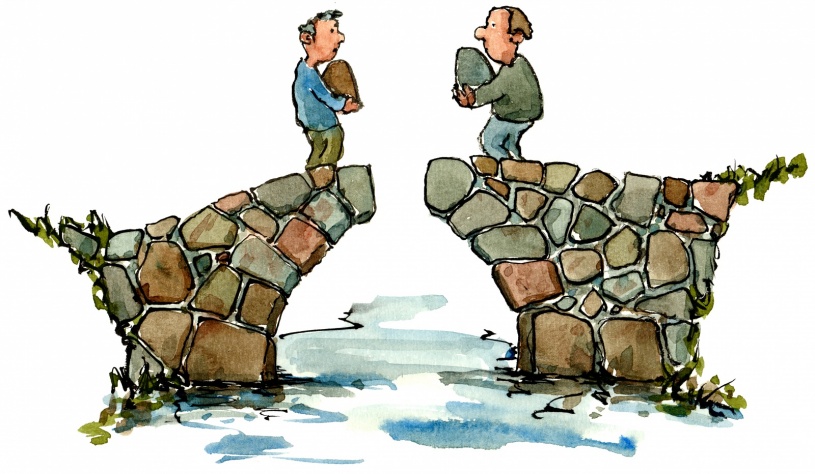
To truly create spaces where your “weirdos” feel safe and included, it means leading who you HAVE not who you are. Just like our staff, students need to feel seen and have trusted adults that intentionally reach out to them. As a leader, one intentional choice that I make is trying to truly get to know each new staff member as a human being first. That means listening to their stories, finding out about their hobbies, asking what artist did their tattoos, where they like to go on vacation, what they like to do outside of work, and most importantly what they HATE to do. No one can have their way all the time when it comes to Professional Development. Sometimes we have to do a sit-and-get training or a staff meeting. But we CAN intentionally ask the art teacher who mostly keeps to themselves to design the powerpoint background and give them credit for it. We CAN ask the very quiet school librarian to share her idea for “What Am I Reading Posters” with the staff at that staff meeting? It’s about intentionally finding that way that a staff member can connect and be included and then BUILDING the bridge (and maintaining it so it doesn’t crumble). It shouldn’t be up to people to try to force their way to the table or across the bridge. INVITE them into the room and let them know that their way is valued.
When it comes to intentionally seeking out and connecting with and including people in a crowd does anyone say it better than Jeff in Almost Famous?
Once you build an inclusive staff – then you can spread those inclusivity methods throughout your student body.
At a previous school, we used a student survey called the Equal Opportunities Schools Survey. It was meant to identify students from typically underserved communities for honors and AP courses to increase campus equity. However, the survey also had an important social-emotional component. One of the questions asked students to identify a trusted adult on staff as well as an adult that they related to. When the results came out, we now had access to some especially important information. Now we had lists of students who identified certain individuals that they really trusted. As an A.P. if I had a student disciplinary concern, now I knew who else to invite to the meeting with the student. Someone that they trusted and who knew would listen to their concerns. It showed us which students related to and had positive relationships with what staff members so that we could intentionally create student schedules, activities, and opportunities for them to interact with one another. As a high school student, it would have been a game changer for me to be able to interact with the Chemistry teacher (she was young, single, lived in the Belmont and Clark neighborhood, had streaks in her hair, and listened to Sleater Kinney). I RELATED to her – but I doubt she ever knew it. I had her for one semester and then never really interacted on that side of the building again. If I had taken the survey and my counselor had had the results of my EOS survey, she could have intentionally placed my locker outside of that teacher’s room to start my day in a positive way. I could’ve seen myself represented and had more interactions with the kind of adult that made me feel welcomed at school. The EOS survey gave us powerful information to create social work groups for students intentionally, and it also revealed students that identified NO trusted adults OR adults that they related to. Now we had a list of students that we could reach out to and TALK TO, listen to, and invite to events or classes in which they would excel. We had the TOOLS to create a bridge. It should NOT be up to the staff members or the students to feel like an outsider AND create their own invitation to the party AND just join in when the party date comes.
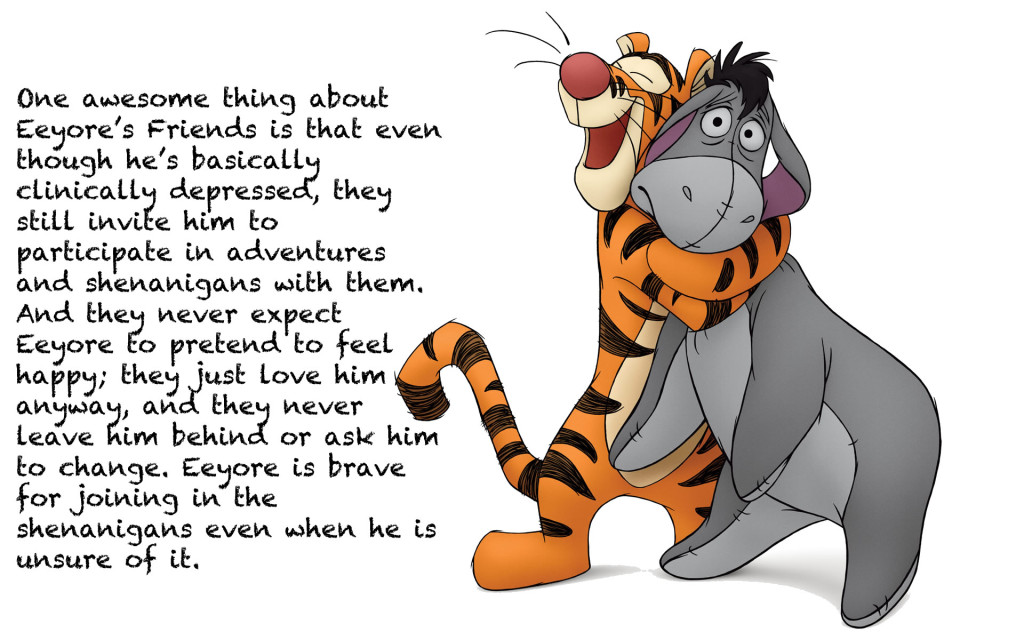
How are you reaching out to your “weirdos”? To those students or staff members who don’t automatically participate. To those staff or students who come in and do their job every single day but don’t necessarily stand out. Or to those that DO stand out (because they have wild makeup or fashion choices that aren’t traditional), but don’t have others like them in the building? Diversity and equity – despite the challenges facing us in this area – can be addressed “easily” (easily isn’t the right word but hear me out). We can hire diverse candidates and pay them equally and then create policies to ensure that we’re doing that. But INCLUSION is a fluid, ongoing, constant, and ever-changing CHOICE that requires unique actions that change from month to month or year to year depending upon the unique aspects of the WHOLE individuals on your staff or student body. Are you finding and creating genuine relationships, friendships, mentorships, and opportunities for your “Eeyores”? (Hot take – they’re not always sad, they aren’t pessimists, but they do tend to keep a little more to themselves)
Recent research indicates that there is a worldwide loneliness epidemic. While the pandemic may have exacerbated it, it was already in the works. Since the 1980’s the Japanese have identified a population referred to as hikikomori (shut ins), who withdraw entirely from society. In Japan, this coupled with an aging population may lead to dire consequences for the economy in addition to serious mental health concerns. In the United States, the American Academy of Pediatrics has declared a national emergency in youth and adolescent mental health. One aspect that both the US and Japanese mental health crises have in common is a lack of connection, low self-esteem, anxiety, and depression. An important fact to note regarding the hikikomori, per the CNN article above, a rising percentage of them are people between the ages of 35-50. (sounds like the age of the bulk of the workforce/your staff). Both your students and staff members spend a large majority of their waking hours in a school building. If we want to prevent loneliness, isolation, bullying (much of which is an off shoot of forming poor peer relationships, having low self-esteem, or copying bullying behaviors witnessed in the home), we have an obligation to create inclusive, welcoming, and safe spaces for our teachers to work and our students to learn. I recently talked to Charle Peck on her podcast, the Thriving Educator. One of the topics we talked about is that to truly end bullying we need to disincentive the behaviors that motivate bullies by removing the social “rewards” of those behaviors (awards, attention, promotions, etc.). Additionally, we need to CELEBRATE the behaviors that inspire kindness, inclusivity, and self-belief. However, without intention, we can’t expect these things to happen by accident. Behind every healthy family, workplace, school district, or classroom there are daily decisions being made to ensure that not only does everyone have a seat at the table, but that that seat is cozy. What can you do today to make someone’s seat a little more comfortable, even if you need to stand up for a few seconds?
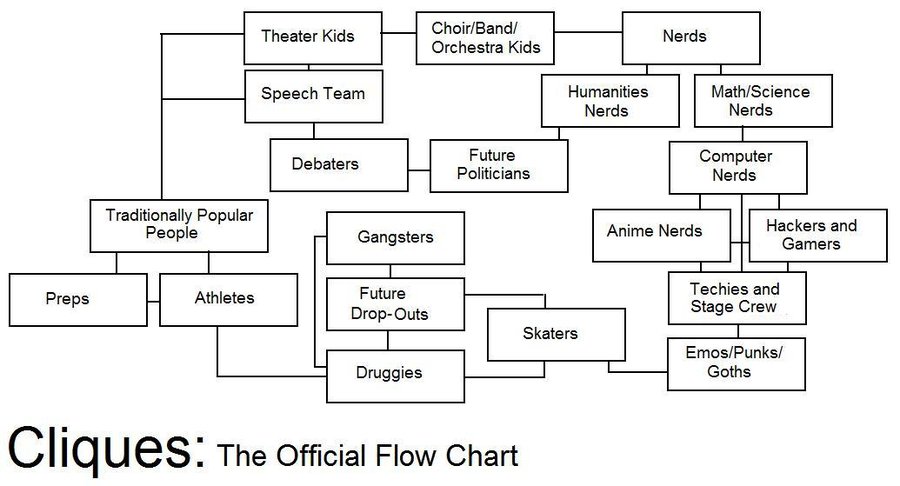
Being a middle and high school teacher for decade(s) has given me a lot of experience with cliques, subcultures, groups, “scenes”, and teen dynamics. Of course as an adult, everyone has their own distinct memories of living through those dynamic/traumatizing/formative years – but when you see it day in and day out through multiple trends and variations daily at work – then as an adult your reflections tend to stay rooted a little more in realism rather than the rose-colored glasses of a long-removed adolescence.
There are so many things missing from this flowchart!
While most of my college or high school friends would have described me as a “goth kid”, I always hated being put into a box. Then, (and now) I am more likely to describe myself as a “nonconformist”. I never quite fit in entirely with one group over another in high school. Of course, going to a high school of less than 900 students; I didn’t have much of a choice. There were maybe 3 goth kids, a couple of punks, a couple of skateboarders, a raver or two, and a few random hippies. Everyone else was some sort of a variation of the typical preppie kid. Those of us that were involved in some sort of a subculture had no choice but to stick together at school because the rest of the “gen-pop” kids simply referred to our entire diverse collective as “the freaks.” In some ways, I’m incredibly grateful for the experience. All of the kids that I knew from other local (and much larger) public high schools were usually “stuck in their clique”. The punks hung with the punks, the skaters hung with the skaters, etc. and in addition to the gen-pop kids harassing them – their groups harassed each other (primordial internet flame-wars, fights, etc). Every teenage scene still has a certain level of pretention to it. Each clique tends to move and act with a singular “hive mind” that looks down on all of the other hives. Having been deprived of having a single scene to completely immerse myself in – I just floated from one day to the next embracing the parts of each group that I learned from, enjoyed, listened to, or liked – without the added pressure of ever truly fitting in. You couldn’t really be shunned by “the freaks” (unless you joined the football team – and in reality at my small school not even that wouldn’t have mattered much). In a lot of ways my nonconformity/lack of exclusive “loyalty” to any particular scene is what built the foundation of my adult personality and eventually my teaching philosophy and the path of my career in education. The experience taught me to be multi-faceted, appreciate other people’s differences/strengths, have a thick skin, and to be courageous, empathetic, and collaborative.
I have always considered myself a “late bloomer” to the music world. When I was little, the only music that I heard was classical ballet music in my dance classes, or whatever oldies/folk/talk radio that my dad listened to in the car. When all of my young tween friends were discovering New Kids on the Block, I was reading books and knew about 4 songs by John Denver. By the time I got to Junior High, I had finally started to listen to music for pleasure. From the beginning I guess I was “weird” in that I didn’t have a defined or set “taste”. The first CD’s I bought with my own money (at Coconuts Music) in 7th grade were the soundtrack to the Bodyguard and Ugly Kid Joe (I can’t believe they still exist btw). My taste has always been eclectic. Both then and now I was/am just as likely to listen to Peter, Paul, and Mary, Chopin, KMFDM, Nine Inch Nails, Screeching Weasel, Prince, or Depeche Mode. Mixed tapes in my earliest driving days were unpredictable. One of my favorite tapes had “Misty Mountain Hop” by Led Zepplin followed immediately by Screeching Weasel’s “I Hate Led Zepplin”. The irony of loving them both and blasting them in rapid succession was a favorite part of my carpool ride home from school down Hohman Avenue. One of those commutes listening to my crazy eclectic mixed tapes may actually have been the subconscious beginnings of my eventually becoming a teacher. (Which at the time didn’t even exist as a fully-formed thought in my mind. I went to college with the full intention of becoming a dentist)
Glam GothsCasual Coffee Shop GothsSweaty Club Goths
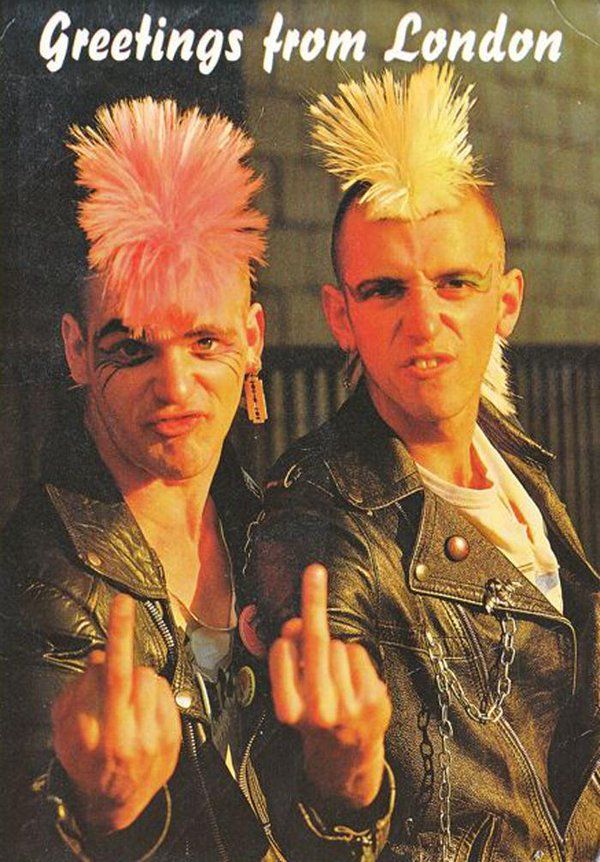
One of the kids that I hung out with, Mike Hentic – a true punk through and through (2-foot mohawk and all), was in my car with a couple of his other friends. I didn’t go to school with Mike and I was usually a quiet person out in public who didn’t say too much until I felt that I really had something to say – so he had no idea that I was “smart” before that day. I remember wearing a Siouxsie and the Banshees t-shirt and a typical black skirt and boots that day but when he got into the car he noticed we were listening to the punk bands the Queers and the Descendants. A friend of Mike’s that was with him muttered the usual critique of “are you goth or what? why are you listening to punk? what a poseur.” After reminding him (in a typically teen angsty way) that my poseur gas was actually giving him a ride, I asked him what he thought being a punk meant. He gave me the usual “doing whatever you want and not caring what people think!” I told him that me listening to whatever I felt like while wearing whatever I felt like- despite what other people (including punks) thought – was me living exactly the philosophy that he was describing. At some point, I told him if he wanted to get right down to it, Socrates started the punk movement because of his firm and public ability to tell people who tried to control his thoughts to “get bent”, and drank poison instead – all while wearing a simple white toga. He humored me and eventually told me that I was a nerd because I knew so much about history. Later on that summer when someone ELSE called me a poseur at the local diner hangout, Mike just said, “dude trust me she’s punk as hell. But unless you want to learn about the crusty BC year punks just let it be.” I was picked on for being a goth that listened to punk music and was simultaneously ridiculed by some goths who also called me a poseur because my interests extended into more than one musical and fashion genre.
As a result, I grew a thick skin and learned to unapologetically like whatever I wanted to like. That thick skin has served me well teaching Middle and High School kids for 20 years – and is quite helpful in school administration (if you think teenagers are tough to deal with try taking on some pissed off adult high school teachers). If you can shake off a 17-year old in 1997 yelling “freak kid” out their Plymouth Acclaim window while throwing cans of Pepsi at you – it seems like less of a big deal when a 6th grader in 2008 says “Ms. H please don’t wear that shirt with those pants – woof!” If you can tolerate a peer cheerleader in 1996 saying, “Umm what’s with the makeup Morticia? Are you TRYING to look ugly?” then it doesn’t seem like as big of a deal when a group of teachers tell you you that the SEL project that you worked on all summer long for their benefit is something that they consider to be a “total waste of time”. Dragons and alligators have nothing on this former goth kid’s pale skin.
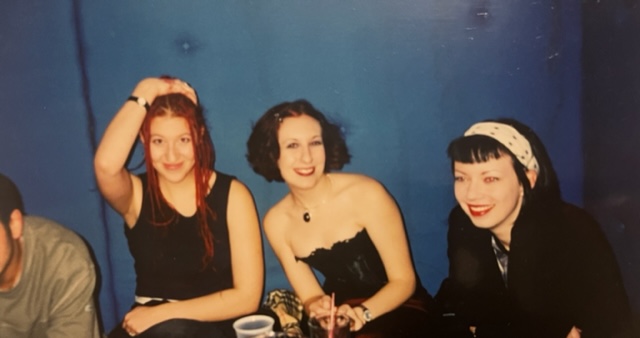
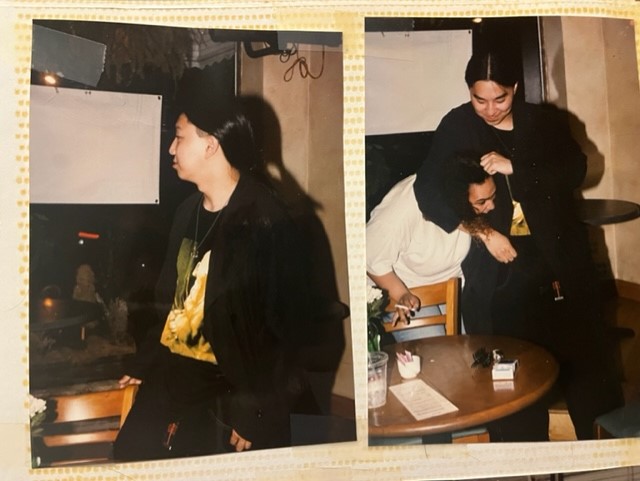
A trait that I never considered myself to have when I was younger was courage. I wasn’t the first kid to raise their hand in class or give their presentation. Then, (and still now) I consider myself an introvert. But I suppose there’s a certain level of “courage” (or attention-seeking) involved in bleaching your hair white, dying it blue, wearing plastic pants, feather boas, and funeral veils when everyone else is wearing GAP jeans, sports jerseys, and baseball hats. My friends and I knew that we’d get comments or stares or peoples’ eyes rolled in our general direction when we rolled up to River Oaks or Southlake Mall looking like a combination of Rocky Horror Picture Show walk-of-shamers, anarchist weirdos, and gender-benders. We did it anyway. We faked it until we made it. If it bothered us – we didn’t let anyone know it and defiantly trekked through Record Swap, Gadzooks, or the food court anyway. The early to mid-90’s didn’t exactly have the same vibe or expectation of “tolerance” that we have now. (We are not THERE yet as a society in terms of tolerance and in fact these past couple of years may have set us back a bit; but there has definitely been some growth) For example; Brad Pitt just got praised for wearing a skirt to a red carpet event. My buddy Colin got a beer thrown at him for wearing the sparkly dress in the picture below that was taken in 1999. As a society perhaps we’ve grown a little bit – but it still takes courage to be different and it always has. That courage has helped me tackle things like being told “you’re teaching Sex Ed to 7th graders next year”, “you’re giving a School Board Presentation on the effectiveness of the program you created”, “you’re going to get a union grievance”, “you’re going to train an auditorium of 1000 teachers”….. or any other variety of difficult/uncomfortable things that I’ve faced over the years. If I could walk into a mall wearing fishnets as sleeves without batting a glittery eyelash I suppose I’m pretty well-fortified from any nerves that I may get from facing high school kids and teachers.
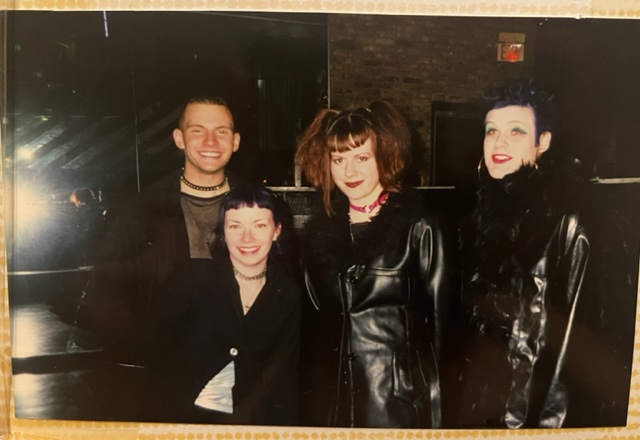
Gotta have a fuzzy coatLeft-wing anarchist punksGlitter and Feathers for Days!So many clothing items made out of plastic in one picture
Constantly having to defend my own interests and unconventional style helped to make me a lot more accepting of others as a teenager. While other kids in subcultures and cliques fought amongst themselves, I just did my own thing. I didn’t NEED any particular group to accept me. (I also attribute this to my independent nature as a kid who liked to play by herself – see a previous post). As a result, once I got into my first classroom, I wasn’t bothered too much by tweens making borderline “disrespectful”/shock-inspiring comments. Besides wouldn’t it be hypocritical of me to get on a kid for being a little shocking when I was wandering through the mall in full on pleather and doc martens in the 90’s? I don’t usually get escalated easily. If you can’t make fun of yourself and be vulnerable in front of your students or your staff life gets very stressful and unhappy very quickly. (Have you even made it in 21st century education until your students make a diss-meme about you that you laugh at completely un-offended in front of them? Then make it into a running gag in the class?)
Diss meme means you’ve MADE it!
When I was a teenager, I had a carefully cultivated goth image but was able to code switch from one crowd to another in order to “participate productively within every group” – even if they didn’t fully accept me as one of their own. I had a passion and curiosity for learning about other people and their interests and tried to listen more than I talked. As a result, there were and still are very few people that I can’t at least marginally relate to. That empathy and ability to see things through multiple lenses (the punk lens, the goth lens, the jock lens, the administrator lens, the teacher lens, the parent lens, the student lens), makes it possible for me to adapt to (note – adapt to but not necessarily like) whatever role is needed given a particular situation at school. I can be the listener to the upset kid whose parents are getting divorced, I can enthusiastically applaud the student who just did his first slam dunk on the basketball court (even though I HATE school athletics I can embrace being a “poseur” and cheer my little black heart out), and I can rock out to support the kids at the band concert (even if they’re playing the WORST songs ever) . Without changing my core beliefs, I can be supportive and find the value in others’ talents even when they vastly differ from my own or involve things I would never choose to do myself. Every group and situation has something that you can find to like or at least appreciate within it (I mean within reason because racists or hate groups don’t have ANY redeeming qualities – I’m talking about types of school cliques, music genres, or subcultures not political parties or hate groups). Life is just too short to limit yourself to being afraid of being called a poseur. I’ll never be a math teacher – but I sure as hell will beg, borrow, and steal awesome strategies I’ve seen math teachers use – just like I’ll NEVER be a denim-shorts-wearing country girl but will rock out with Hank Williams and John Denver anytime.
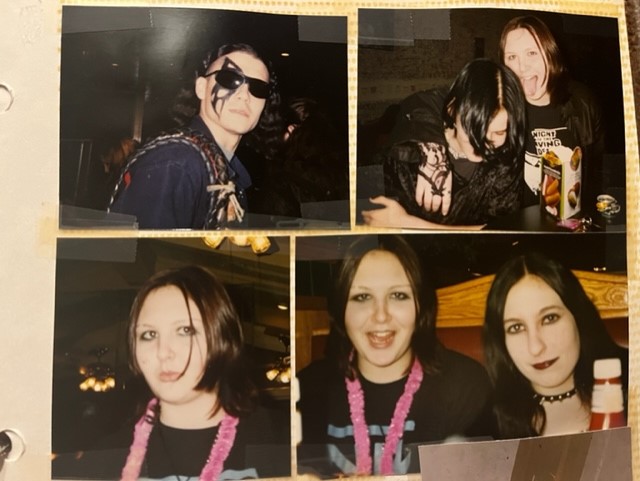
Gotta Have Blue HairAnd purple hairAnd gogglesAnd Plastic Pants even in 95 degree weatherAnd Trenchcoats for days!
A lot of the typical goth or punk kids that I went to school with all LOATHED school. They took pride in being the biggest assholes they could to anyone in a position of authority (parent, teachers, cops, managers at restaurants, etc). I’m sure we all have memories of the “punk kids” with mohawks, prison-style homemade tattoos, and ripped up plaid pants being wildly and openly disrespectful to teachers, storming out of classrooms, yelling at cops, or skateboarding down a hallway. Or the Goth kids cutting class to smoke cloves behind the athletic shed and giving teachers the finger (South Park gets Goth kids SO RIGHT!) Or the hippies hiding under the bleachers smoking pot and getting into fights with the baseball team. But that was never me. I may have broken my private school’s dress code openly by wearing heavy black makeup, ripped up fishnet tights, outrageous jewelry, and dark lipstick but I never misbehaved (at least not by being disrespectful). I never got a detention or got sent to the dean’s office (for anything OTHER than my clothes or makeup). I didn’t give teachers a hard time or take a “damn the man f-you” attitude. In fact, it really bothered me when other goth or punk kids DID do that. In fact, the teachers that many of my peers hated the most were some of my favorites. I can still remember that Mrs. Cantwell (dreaded by my peers); taught me how to take my writing to the next level. Her “harsh” grading pushed me to new heights. Her advice sophomore year and high expectations prepared me more for college than any of the typical “popular teachers” ever had. She was tough as nails and had high expectations of her students and herself – which in a lot of ways is also how I am. I hated when other kids disrespected her.
This is the image inside every non-conformists’ head when faced with something they think is trash. But whether or not it stays in your head usually the makes all the difference.
I was always a subliminal/understated sort of semi-anarchist/disrupter. I have never thought it was useful to convince people that you were an asshole if you wanted to change things. In order to change systems it requires collaboration. And frankly, no one wants to collaborate with an asshole. It’s probably just one of the reasons why violent revolutions throughout history fail – assholes who won’t collaborate, compromise, or get others on board with their ideas. If you want to take down systems, laws, or institutions that are bogus – you have to actually understand them. Being seen as an idiot or an ignorant/rude asshole won’t get you what you want – it will alienate you from anyone who might actually agree with you and be able to help you. Taking your anger out on people that have no influence on the architects of those systems won’t get you what you want either. Telling a teacher to fuck off because you didn’t do your homework really isn’t the way to address educational inequality or the oppression that you feel that your school’s dress code represents. I’ve always believed that you catch more flies with honey than with vinegar.
The punk scene is chock full of anger and piss and vinegar; and the goth scene is FULL of “look-down-your-nose at idiotic/uneducated people” pretention. But the most influential punks/goths that I have known over the years just aren’t assholes. They listen, create and cultivate an audience that they treat with respect, and move toward solutions and/or advocacy methods that promote win-win solutions. I used to tell my friends all the time that “your getting kicked out of school for being a dick doesn’t make you a punk – it makes you stupid. And then you fulfill every stereotype out there that people have about people like us – that we’re idiots who don’t care about anything and aren’t educated and don’t have jobs, and don’t have any ideas worth listening to. Being a nonconformist doesn’t mean you have to be an asshole.” One raver kid at my high school that was lumped in with us “freaks” organized a peaceful boycott of our schools’ vending machines. When the price of a can of Pepsi was raised from 25 cents to 75 cents everyone was upset. He organized a boycott of the machine that was peaceful and had literally the entire student body (even those that usually threw Pepsi at him for wearing glittery eyeliner) participating. The price was changed back. (Those were the days!) If he had just vandalized the machine and gotten kicked out of school – we probably would’ve ended up with no vending machine at all. Everyone got together to collaborate with him toward a common goal – no one got kicked out of school – and we all ended up getting what we wanted (25 cent cans of soda). A small victory for sure – but an example of effective collaboration with an unconventional leader towards a common goal.
I never believed that a system could really be “completely taken down” from the inside – but rather that it could be incrementally changed from within – and that it would never get changed at all without understanding it’s history, how it worked, or it’s intricacies. I rely on this belief a lot when it comes time to work on my school(s)’ Improvement Plans every year. You don’t walk into a school and burn it all down and throw out the baby with the bath water and have a “revolution” to increase the diversity or equity within your building. You don’t just fire everyone and start fresh. You can’t expel all 1000+ students and get new ones and start over. But you CAN study and understand what you have, the strengths and weaknesses of everyone that you’re working with, determine what you need, and then collaborate as a cohesive group to change the parts of the system that need improvement. You can’t do that if you’re too busy burning everything down while everyone on your team thinks you’re a rude asshole. You can be angry at the way things are and you can ALSO be productive in changing things effectively without making enemies out of everyone you meet (although you’re definitely going to make enemies if you’re trying to improve any system in a school, business, or society in general).
A lot of people that were heavily involved in a subculture in their adolescence or adulthood will describe it as a “family”. A place that they felt welcomed into and fit in with. A safe community where they felt valued and cared for. Unfortunately, many of the people my own age that I encounter that have this rather fond and rosy view are in fact, men. Like society in general, subcultures were a microcosm of a society. (And society favors men. They make the rules and are generally the gatekeepers. They manage the bands, book the shows, sell the tickets, control the record companies, own the fashion companies , run the stores, and frankly they make the money if there’s money to be made). I don’t have all of the same rosy memories of goth/punk shows and “the scene” that many of my male peers seem to. These memories tend to branch off in different directions mostly when we talk about shows. (Although that’s not to say I didn’t have the time of my life at a lot of shows – I definitely did!) While many guys describe these experiences as fun and say that the crowd(s) had a certain kind of unity (“if you fall someone picks you up!”) – for teen girls and young women in that scene the experience was often different.
When I was 16-23 I’m sure I would’ve loved to be close to the stage when I saw my favorite bands and idols in the flesh. It looked really fun from the back of the venue. But the few times that I ventured (or was allowed) close; it just seemed like a some sort of exercise in toxic masculinity (Mind you not ALWAYS but more times than not). A lot of those “pits” were just an excuse for people (ie guys) to fight without repercussions. And some girls who were just trying to enjoy themselves and actually watch the band were aggressively elbowed, punched, hit, trampled, or more nefariously groped by guys who used the excuse “stay out of the pit if you don’t want to fight/get groped/manhandled!” (Young ladies were not always blameless in this scenario either – some of them were also wildly aggressive fighters too) Every girl that I personally associated with back then knew better than to wear a skirt to a punk or a metal show. In reflection, the irony is that many groups at these shows who claimed to be “against the system!” and into “unity” didn’t always seem very into actual gender equity and respect when the rubber was hitting the road at shows. Of course these are broad generalizations – a lot of young men that I interacted with back then weren’t like that on an individual basis and tended to “protect” their female friends. But the ironic fact that a scene that claimed to be inclusive even needed to “protect” it’s own members from one another wasn’t lost on me then or now.
Of course there’s a difference between equity and equality. Many young people involved in a subculture that’s “for equality” meant just that. It’s equality (“You’re in the pit just like the big boys so I can punch you!”) vs. equity (“everyone paid their money to see the band and you’re really short and can’t see from the back so I’ll move over to the left a little so you can see”). The few times in my show-going career that I refused to allow myself to intimidated out of getting close to the stage; usually (NOT ALWAYS) crappy things occurred. For example, I was projectile vomited on by someone who got punched in the gut during a “mosh pit” at a Strung Out show; someone literally tore my shirt off my back at a Nine Inch Nails concert, I was shoved onto the floor at a Skinny Puppy show, and an entire beer was dumped deliberately on my head by a 6’5 dude when I asked him if he could move over a little bit so I could see the stage better at an MxPx show. Those were NOT experiences that made me feel “unity” or “accepted” or a “part of a family” or “protected by my crew”. I don’t bring up these experiences to throw shade at my fellow male music-loving subculture members. They’re just to point out that in my own experience as a “non-conformist” these “anti-system” groups didn’t ever break too far away from most of the societal molds they claimed to fight against.
So I suppose in some senses these guys ARE right – the group was a “family” – and some families don’t always include everyone in a way that makes everyone feel valued and protected. Some families are dysfunctional. Although no one likes being puked on, I am grateful for these experiences and the perspective it has given me on working with groups and crowds. I try to recall those experiences when I’m creating classroom communities or committees or issuing student disciplinary consequences now. Am I hearing all of the voices? Am I creating an experience where all can hear and value one another and everyone is safe? Are there people at the back of the venue who are trying to see and participate more that I can safely draw in? Are people participating bravely and being pushed down or abused by their peers as a reward for their efforts? Am I facilitating that unsafe culture or am I working against those behaviors? What strategies can I use or implement that will protect everyone’s voice and let change occur in a meaningful way for everyone in the venue?
I wouldn’t trade my adolescent experience for the world – warts and all. I had the pleasure of meeting and interacting with a wide array of freaks, weirdos, geniuses, jerks, maniacs, musicians, artists, and scholars from a myriad of backgrounds that had a wide variety of philosophies and life experiences. I gained an encyclopedic knowledge of music, ideas, bands, books, fashions, and vernaculars. But more than that I also gained an ability to withstand both mainstream AND pretentious subcultural ribbing. I grew the kind of thick skin that has helped me throughout a career that is frequently scrutinized and criticized from within and without on a daily basis – and I defiantly enjoy it anyway. I learned to unapologetically love what I love and to be who I am regardless of what anyone thought about it. I learned to embrace parts of myself that not even those from a similar “hive” could fully appreciate. I learned to melt everything that I encountered or loved down into an amalgamation of who I would eventually become as a person and as an educator. Additionally, the thick skin I had to grow in high school and college helped me when I was in the classroom as well. There are few professions as cliquey as teaching. Teacher-on-teacher bullying is a true issue within schools. But having a strong sense of who you are and what you value – as well as the ability to buck the system and do your own thing – helps you from becoming a victim (or a perpetrator) of that and facilitates your ability to continue to do what’s best for your own classroom/students/building without giving in to external pressures/toxic systemic practices.
While back then I may have resented being called a poseur and critiqued the antiestablishment “typical asshole” attitude of my “crew” (that I was always on the outskirts of being embraced by), I learned to appreciate multiple lenses and perspectives. Now; I know who I am and what I believe in. I use that self-awareness to authentically be more than one thing (a listener, a leader, a mentor, a friend, a parent-figure, a teacher-leader, etc.) dependent on what the situation requires – while simultaneously not putting on phony airs. I know what I am NOT and try to rely on other’s strengths and expertise when I need them. At the end of the day I want to do what’s best for students (which may not be the same for each student) – sometimes regardless/in spite of what the adults/institution may prefer.
In the words of another punk rock hero; Jack Sparrow, “Take What You Can; Give Nothing Back.” Take what you can enjoy and use from the classics (whether they be John Dewey or Mozart), the rockers (whether they be Black Sabbath or Van Halen), the mainstream gods (whether they be Prince or Lady GaGa), the punks (be they the Dead Kennedys or the Smoking Popes), the goths (be they Siousxie & the Banshees or the Sisters of Mercy), the synthpoppers (be they Erasure or Squeeze), the rivetheads (be they Skinny Puppy or Einstürzende Neubauten), the hippies (be they Cat Stevens or OAR), or any combination of those and countless others. Give nothing back – remain strong and rooted in your values when faced with the peer pressure of your colleagues who want you to conform to what’s easiest. Give nothing back – don’t back down when you face resistance from a staff that is unwilling to reflect on their biases or change. Give nothing back – don’t become an inauthentic version of yourself in front of kids who may need exactly what you are. You don’t have to like everything – but you should know and enjoy as much as you can about as many things as you can. Don’t be that guy pushing people down in the pit – be the one welcoming everyone to safely participate and be included in their truest and most authentic way. When kids see that being an eclectic and eccentric nonconformist who wants to burn the system down (in an educated way without being an asshole) is both possible AND fun – they just might stop dividing themselves into pretentious cliques and work together. Or at the very least; they might learn to collaborate despite their different tastes, styles, and opinions. Maybe our world needs more multi-faceted thinkers and less closed-off overly opinionated mini-cultures (that are still as systematized and male-centered as the ones they claim to be fighting against). Be a hard ass who isn’t an asshole – a warrior who isn’t immovable; a lover and a fighter. Stay rad but without being a jagoff. Party hard but always work harder. Be that example for the quiet, smart, rivethead kid with dreams of being a saboteur and disrupter that also likes to be nice and is into learning algebra. Maybe don’t show up to work in bondage pants everyday but don’t freak out if the kids see that tattoo every once in a while. Actions speak louder than words. The biggest punk of all time wore a toga and the biggest goths of all time took down the corrupt Roman Empire. (It’s both a history AND a Goth joke geez!)











 Like a Phoenix Rising